If you’re a defense contractor seeking certification, understanding what happens after a failed assessment is critical to preserving your contract eligibility, reputation with primes, and overall cybersecurity posture. Here’s what you need to know if your C3PAO assessment doesn’t go as planned and what you can do to get back on track quickly.
First: What Does “Failing” Mean?
In a formal C3PAO audit, you will be assessed on 320 individual objectives. A failure could mean:
- You have unmet requirements without an approved Plan of Action & Milestones (POA&M).
- You failed to provide sufficient evidence or documentation.
- Your System Security Plan (SSP) is incomplete or inaccurate.
- Your environment shows noncompliance with core controls related to CUI protection.
The C3PAO doesn’t “fail” you outright. They report their findings to the Cyber AB, who confirms whether your organization is recommended for certification.
What Happens Next?
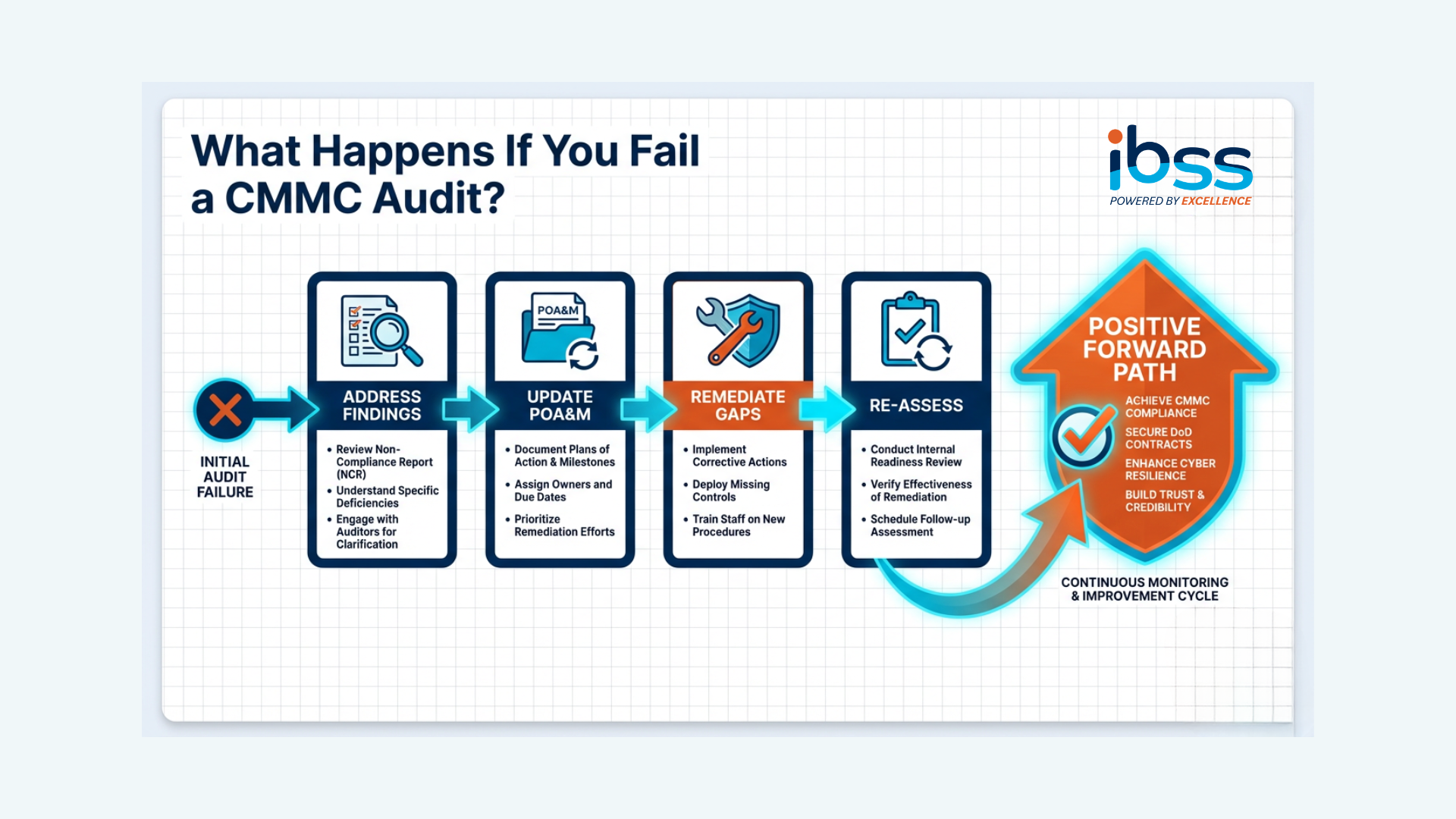
If you’re not recommended for certification, here’s what you can expect:
- You’ll Receive a Formal Findings Report
- The C3PAO will provide a detailed report outlining which controls were not met, and why. This documentation is critical for understanding what to fix.
- You May Be Eligible for a POA&M Window
- The DoD allows limited use of POA&Ms for a select number of low-weighted controls. This is assuming your SPRS score is high enough and you’ve addressed all high-priority security requirements.
- You typically have 180 days to remediate any POA&M items and request reassessment.
- You Must Fix and Retest
- If your gaps are outside the allowed POA&M range, you must address all deficiencies and undergo a new C3PAO assessment.
- This means more time, more money, and potentially missing out on current or upcoming contracts.
What Are the Consequences of Failing?
Failing a CMMC audit doesn’t result in penalties, but it can severely impact your business.
- Loss of eligibility for new DoD contracts requiring CMMC certification.
- Reputational damage with primes or subcontractors who rely on your compliance.
- Delayed revenue and unexpected remediation costs.
- Additional internal stress on IT, compliance, and executive teams.
How to Avoid Failure Before It Happens
Here’s how to increase your chances of passing the first time.
- Conduct a gap assessment aligned to NIST SP 800-171.
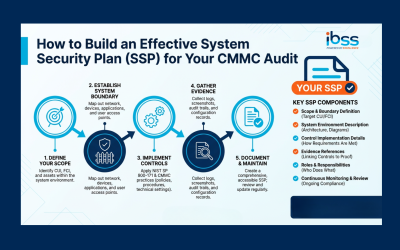
- Build a complete and accurate SSP.
- Document every control with evidence-ready artifacts.
- Create a realistic, funded POA&M strategy (if needed).
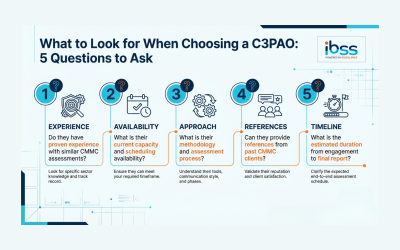
- Choose a C3PAO that understands your business, not just the checklist.
Don’t Wait for a Failed Audit to Take Action
At IBSS, we’ve helped DoD contractors prepare, test, and certify their environments with CMMC-compliant processes and documentation. We know the common pitfalls and help you avoid them before you ever engage a C3PAO.
Book your CMMC Readiness Call today or email us at CMMCC3PAO@ibsscorp.com to start the path toward certification with a team that knows the process inside and out.
About IBSS
Since 1992, IBSS has provided transformational consulting services to the Federal defense, civilian, and commercial sectors. Our services include cybersecurity and enterprise information technology, environmental science and engineering (including oceans, coasts, climate, weather, and satellite), and professional management services.
Our approach is to serve our employees by investing in their growth and development. As a result, our employees bring greater capabilities and provide an exceptional level of service to our clients. In addition to creating career development opportunities for our employees, IBSS is passionate about giving back to the community. We strive to leave something better behind for the next generation.
We measure our success by the positive impact we have on our employees, clients, partners, and the communities we serve. Our tagline, Powered by Excellence, is a recognition of the employees that make up IBSS and ensures we deliver results with quality, applying industry best practices and certifications. Read more About Us.
Keywords: CMMC, C3PAO, DoD Requirements, NIST SP 800-171, Cybersecurity