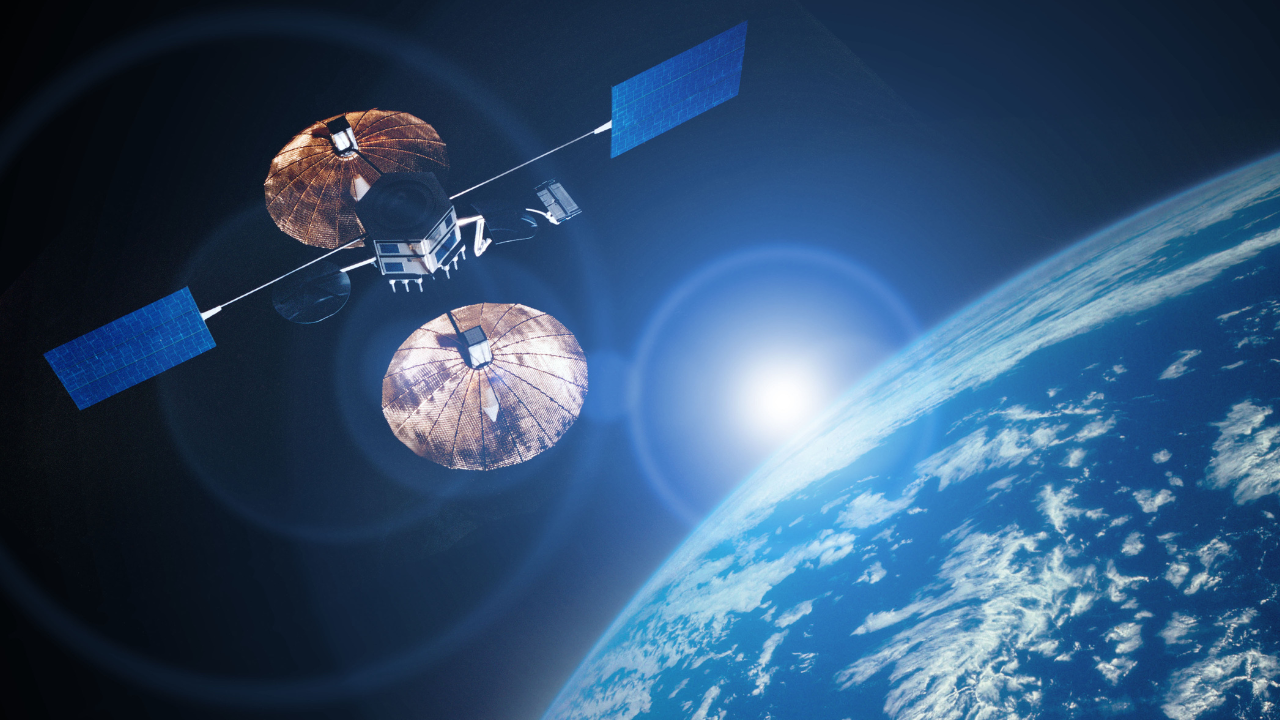
Every day, thousands of satellites race around our planet at speeds of roughly 17,000 miles per hour. They help power the technology we rely on, from GPS navigation and weather forecasting to internet connectivity, emergency communications, and financial transactions. As more countries and private companies launch spacecraft into orbit, the space surrounding Earth is becoming increasingly congested.
Unlike roads or airports, however, space doesn’t have traffic lights, stop signs, or air traffic controllers. So how do we keep satellites from colliding?
A Crowded Neighborhood
Today, space surveillance networks track approximately 40,000 objects orbiting Earth, including more than 11,000 active satellites. Scientists estimate there are over 1.2 million additional pieces of debris between 1 and 10 centimeters in size. These are large enough to seriously damage a spacecraft but often too small to track individually (ESA).
Even though space is vast, many commercial satellite constellations, scientific missions, national security assets, and research spacecraft all operate within the same regions of low Earth orbit. At orbital speeds, even a small piece of debris can cause catastrophic damage if it strikes another spacecraft. As the number of satellites continues to grow, so does the need for better coordination.
Why it Matters
A satellite collision can impact all of us. Satellites play an essential role in our everyday lives. They help meteorologists track severe weather, enable GPS navigation, support emergency response efforts, facilitate communications, monitor environmental conditions, and connect remote communities to the internet. Preventing collisions before they happen is far more effective than trying to deal with the aftermath.
Additionally, a collision can create thousands of new pieces of debris, increasing the risk to other spacecraft and making certain orbital paths more hazardous for years to come. In severe cases, one collision could trigger additional collisions, creating a cascading effect that threatens critical space infrastructure.
Building Better Space Traffic Coordination
As commercial space activity continues to expand, so does the need for a shared system that helps spacecraft operators understand what’s happening in orbit. By combining tracking data, predicting close approaches between objects, and sharing timely information with satellite operators, space traffic coordination helps organizations make informed decisions to reduce collision risks. Much like weather forecasts help people prepare for changing conditions on Earth, these systems provide operators with the information they need to safely navigate an increasingly crowded orbital environment. Rather than relying on a single organization to manage every spacecraft, modern coordination efforts focus on providing accurate, transparent information so operators can work together to keep space safe and sustainable.
Supporting the Future of Space Safety
As the commercial space industry continues to grow, collaboration between government, industry, and technical experts will become increasingly important. At IBSS, we’re proud to support the Office of Space Commerce by providing technical and professional services that contribute to the development of the Traffic Coordination System for Space (TraCSS). As the first public resource of its kind designed to support commercial space traffic coordination, TraCSS represents an important step toward improving the safety, sustainability, and long-term accessibility of Earth’s orbital environment. As of June 2026, TraCSS has onboarded 59 pilot users representing more than 11,180 satellites, making it one of the world’s largest civil space traffic coordination efforts (Office of Space Commerce).
The next time you use GPS to find your destination, check a weather forecast, or make a video call across the globe, remember that countless satellites are working together high above Earth to make these connections. Keeping them operating safely isn’t just about protecting spacecraft; it’s about protecting the technology and services that keep our world connected.
About IBSS
Since 1992, IBSS, a woman-owned small business, has provided transformational consulting services to the Federal defense, civilian, and commercial sectors. Our services include environmental science and engineering (including oceans, coasts, weather, and satellite), cybersecurity and enterprise information technology, and professional management services.
IBSS is committed to service excellence – to our clients, employees, partners, and the global community as a whole. We proactively create value through science, technology, innovation, agility, and adaptability.
Keywords: space traffic, space satellites, space safety, traffic coordination system for space