What Are Ghost Nets?
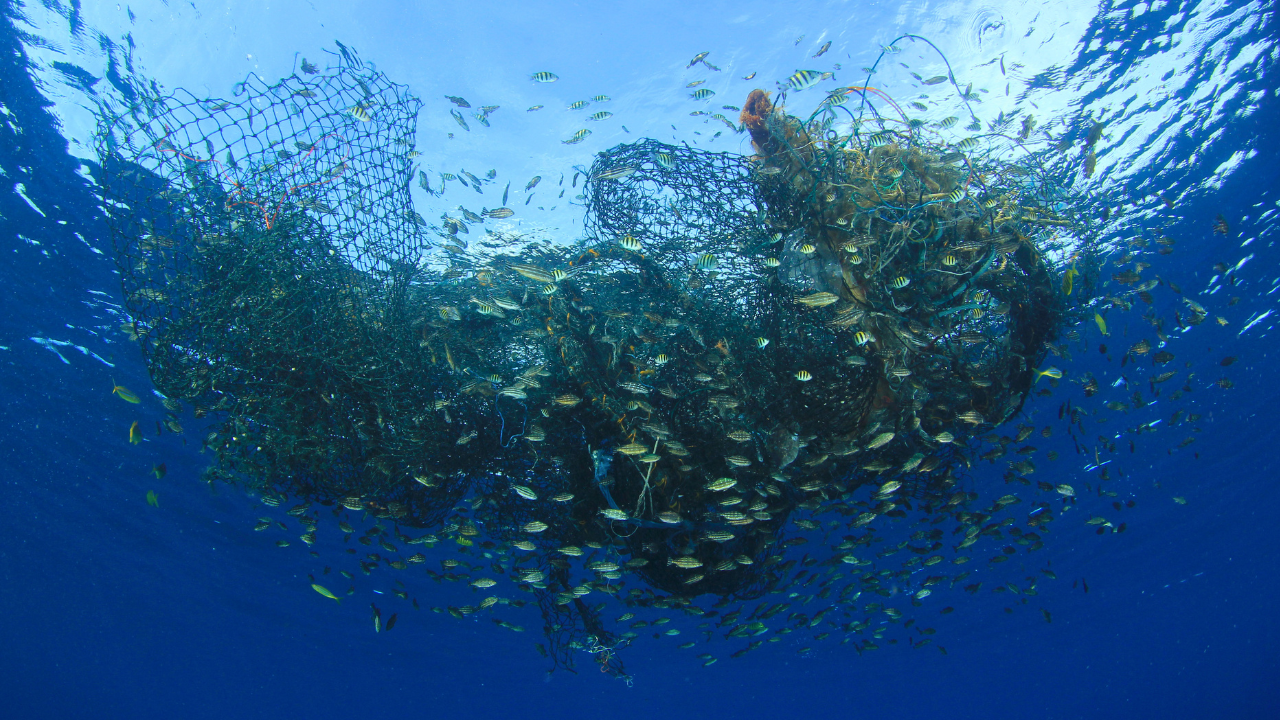
Ghost nets are fishing nets that have been lost, abandoned, or discarded in the marine environment. They can include gillnets, trawl nets, crab pots, lobster traps, and other commercial or recreational fishing gear. Unlike many forms of marine debris that simply float or wash ashore, ghost nets continue functioning exactly as they were designed, catching marine life. Made from durable synthetic materials such as nylon, many ghost nets can remain in the ocean for decades before breaking down. It takes approximately 600-800 years on average for ghost fishing nets to naturally decompose.
Why Are Ghost Nets So Dangerous?
Ghost nets present a unique threat because they continue to “fish” without human involvement. This process, often called ghost fishing, can have devastating consequences. First, they trap marine wildlife. Sea turtles, seals, dolphins, whales, sharks, fish, and seabirds can all become entangled in abandoned fishing gear. Animals may suffer injuries, become unable to feed or surface for air, or die from exhaustion or starvation. Because the nets remain in the water, they can continue trapping additional animals over and over again.
Secondly, they are dangerous because they damage sensitive habitats. They harm the environments where marine species live because they scrape and smother coral reefs, seagrass beds, and other sensitive benthic ecosystems. These habitats provide food, shelter, and breeding grounds for countless marine species. Damage can take years to recover.
Lastly, ghost nets contribute to plastic pollution. Most fishing gear is manufactured from strong plastic polymers designed to withstand harsh ocean conditions. Over time, sunlight, waves, and weather gradually break these materials into smaller pieces known as microplastics. These tiny plastic particles can be consumed by marine organisms throughout the food web, creating long-term environmental challenges that extend well beyond the original abandoned net.
Why Are Ghost Nets Difficult to Remove?
Unlike floating debris, ghost nets are often located in remote coastal areas or become snagged on reefs, rocks, or underwater structures. Many accumulate in regions with strong currents or rough seas, making recovery both physically demanding and logistically complex.
Successful removal efforts often require specialized vessels, trained dive teams, and careful environmental planning. In addition, it requires coordination among scientists, government agencies, and marine debris experts. Removing ghost nets safely helps prevent additional harm to wildlife while protecting fragile marine habitats during recovery operations.
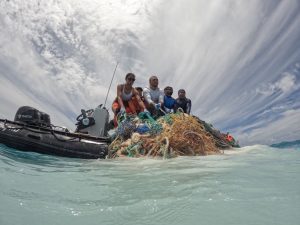
Photo credit Papahānaumokuākea Marine Debris Project (PMDP) and Andrew Sullivan-Haskins
The Importance of Marine Debris Removal
Recovering ghost nets before they continue causing damage offers immediate environmental benefits. In 2018, it was reported that up to 650,000 marine animals are killed by ghost nets every year. While preventing debris from entering the ocean remains essential, removing existing ghost nets is equally important for protecting marine ecosystems today.
Marine debris removal helps:
- Reduce wildlife entanglements
- Protect coral reefs and sensitive habitats
- Prevent additional plastic pollution
- Improve ecosystem health
- Support healthier fisheries
- Preserve biodiversity
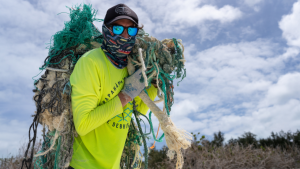
Photo credit Papahānaumokuākea Marine Debris Project (PMDP) and Andrew Sullivan-Haskins
How IBSS Supports Marine Debris Removal
Protecting marine ecosystems requires coordinated action in some of the most remote and environmentally sensitive areas in the world. IBSS supports large-scale marine debris removal efforts by providing scientific, technical, and operational expertise for missions focused on protecting vulnerable coastal ecosystems. Working alongside government partners, IBSS helps coordinate complex field operations that remove abandoned fishing gear and other marine debris while minimizing impacts to sensitive habitats.
One example is IBSS’ support of the Papahānaumokuākea Marine Debris Project (PMDP), which conducts large-scale marine debris removal missions throughout the Papahānaumokuākea Marine National Monument. These expeditions target abandoned fishing gear, including ghost nets, that threaten one of the world’s largest protected marine ecosystems. By combining environmental science, operational planning, and field expertise, IBSS helps advance efforts that protect marine wildlife, restore critical habitats, and support the long-term health of our oceans.
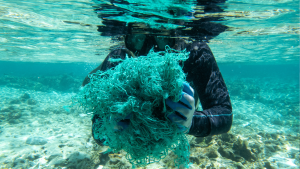
Photo credit Papahānaumokuākea Marine Debris Project (PMDP) and Andrew Sullivan-Haskins
Looking Ahead
Ghost nets may be out of sight, but their impact on marine ecosystems is far from invisible. From entangling wildlife to damaging coral reefs and contributing to plastic pollution, abandoned fishing gear remains one of the most persistent threats facing our oceans.
Continued collaboration among scientists, government agencies, industry, and environmental organizations is helping address this challenge through prevention, recovery, and responsible management of marine debris. Every ghost net removed represents another step toward healthier oceans, stronger ecosystems, and a safer future for marine life.
About IBSS
Since 1992, IBSS, a woman-owned small business, has provided transformational consulting services to the Federal defense, civilian, and commercial sectors. Our services include environmental science and engineering (including oceans, coasts, weather, and satellite), cybersecurity and enterprise information technology, and professional management services.
IBSS is committed to service excellence – to our clients, employees, partners, and the global community as a whole. We proactively create value through science, technology, innovation, agility, and adaptability.
Keywords: PMDP, ghost nets, marine debris, ocean cleanup, plastic pollution