An insider threat can involve a current or former employee, contractor, vendor, or business partner who intentionally or unintentionally compromises an organization’s security. While malicious insiders receive much of the attention, accidental mistakes remain one of the most common causes of security incidents. As organizations continue adopting cloud services, remote work, and digital collaboration tools, understanding insider threats has become an essential part of any cybersecurity strategy.
What Is an Insider Threat?
An insider threat occurs when someone with legitimate access to an organization’s resources causes harm to its operations, data, or systems.
Insider threats generally fall into three categories:
- Negligent insiders who unintentionally expose sensitive information through mistakes, such as clicking phishing links, misconfiguring cloud storage, or sending data to the wrong recipient.
- Malicious insiders who intentionally steal data, commit fraud, or sabotage systems for financial gain, revenge, or another personal motive.
- Compromised insiders whose accounts have been taken over by cybercriminals through phishing, credential theft, or malware.
Each type presents different challenges, but all have the potential to disrupt operations, damage reputations, and create significant financial losses.
The Numbers Behind Insider Threats
Recent research shows that insider threats continue to grow in both frequency and cost.
According to the 2025 Ponemon Institute Cost of Insider Risks Global Report:
- Organizations experienced an average of 25 insider-related incidents per year, up from 20 incidents just 2 years earlier.
- The average annual cost of insider threats reached $17.4 million per organization.
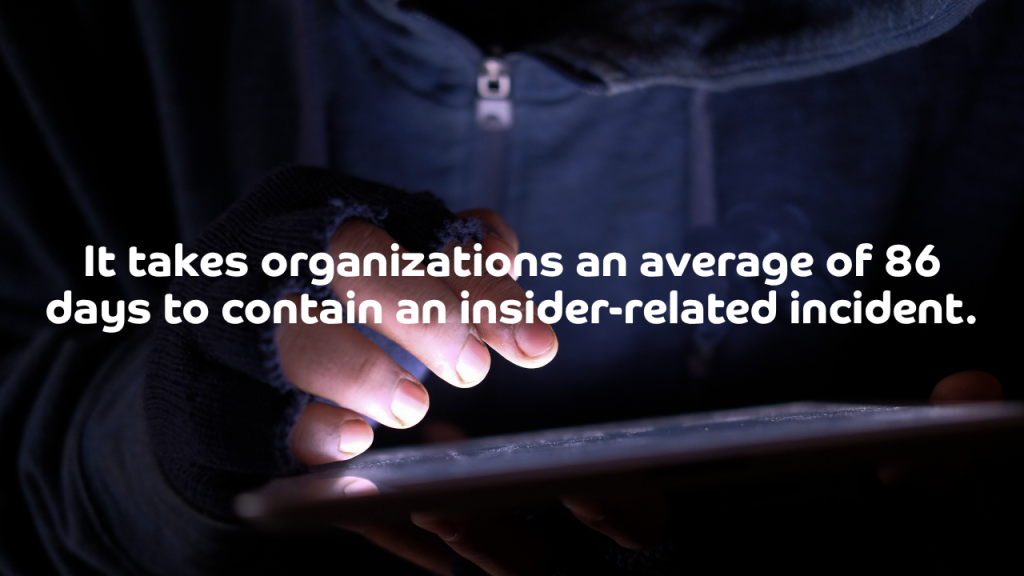
- It takes organizations an average of 86 days to contain an insider-related incident.
- Negligent employees account for the largest share of insider incidents, even though malicious insiders typically create greater financial damage.
The Verizon 2026 Data Breach Investigations Report (DBIR) also found that the human element is involved in approximately 60% of data breaches, including errors, misuse of privileges, credential theft, and social engineering attacks. These statistics demonstrate that cybersecurity depends on both technology and informed users.
Why Insider Threats Are Increasing
Several workplace trends have expanded the opportunities for insider-related incidents. For example, organizations now manage larger volumes of sensitive data across multiple cloud platforms. Employees regularly work remotely and access company resources from different locations and devices, and third-party vendors often require privileged access to internal systems. At the same time, cybercriminals have become increasingly effective at stealing legitimate credentials through phishing campaigns and other social engineering techniques.
Artificial intelligence has added another layer of complexity. AI-generated phishing emails, deepfake voice calls, and automated social engineering campaigns make it easier for attackers to impersonate trusted individuals and gain unauthorized access using valid employee accounts.
Building an Effective Insider Threat Program
Managing insider risk requires more than just monitoring employee activity. Effective programs combine cybersecurity controls, clear policies, and ongoing education.
Organizations can reduce insider risk by:
- Providing regular cybersecurity awareness training.
- Implementing least-privilege access controls.
- Monitoring unusual account activity.
- Enforcing multi-factor authentication.
- Maintaining strong data classification and handling procedures.
- Reviewing user permissions regularly.
- Establishing clear reporting procedures for suspicious activity.
Creating a culture where employees understand their role in protecting sensitive information is equally important. When people know how to recognize suspicious behavior and feel comfortable reporting concerns, organizations are better positioned to prevent incidents before they escalate.
Insider Threat Awareness Is Everyone’s Responsibility
Every employee interacts with sensitive information differently, whether accessing customer records, managing financial data, supporting critical infrastructure, or collaborating with federal partners. Security depends on each individual’s understanding of how their daily actions affect the organization.
Insider Threat Awareness Month provides an opportunity to review policies, reinforce cybersecurity training, and evaluate whether existing security controls continue to meet today’s evolving risks. Technology remains an important part of cybersecurity, but informed employees, strong governance, and continuous awareness remain some of the most effective defenses against insider threats.
About IBSS
Since 1992, IBSS, a woman-owned small business, has provided transformational consulting services to the Federal defense, civilian, and commercial sectors. Our services include cybersecurity and enterprise information technology, environmental science and engineering (including oceans, coasts, weather, and satellite), and professional management services.
IBSS is committed to service excellence – to our clients, employees, partners, and the global community as a whole. We proactively create value through science, technology, innovation, agility, and adaptability.
Keywords: insider threat awareness month, insider threat statistics, insider threat prevention, insider threat cybersecurity, cybersecurity best practices, organizational cybersecurity, cybersecurity compliance, federal cybersecurity, cyber risk management, protecting sensitive data